
What Makes a Good Website: A Short Guide
01204 263028
A quality, optimised website is an essential aspect of marketing. A website should be considered as your business’s ‘front door’, as for many potential customers, it will be the first thing that they see. A well designed website can be the difference between converting web users into customers or missing out on them.
Having a high quality, attractive and informative website will also help potential customers understand your business better. A well designed, secure website will help build credibility and trust with potential customers and will provide your business with a unique online identity.
Bark Street Digital offer a website design and development service to help brands and businesses create an online presence to increase profits by generating more customers and clients.
What makes a good website?
Your website will serve as the main place to display your products and services. It will be the backbone of your marketing strategy, with all social media posts leading back to your site. Therefore, effort and focus must be put into your website to represent your business well.
So, what makes a good website? There are specific qualities that a business website should have in order to perform at an optimal level. These include the following:
- Website design and functionality – Your business website reflects your business’s products, services and, ultimately your brand. Therefore, it is essential that your site is professional, visually appealing and polished. Using uncluttered layouts and white space, specific colour schemes, and quality graphics or logos can all help to improve the visual aspects of your website. Digital marketing experts can help during the design process of a website to ensure that your brand is well represented.
- User experience and usability – It is common knowledge that web users want information quickly and will not wait around. You should make it as easy and quick as possible for them to find what they are looking for on your website. User experience (UX) plays a key role in helping site visitors use and understand your site. Create logical and obvious navigation with a clear hierarchy and use consistent layouts for usability across the site. Including an on site search bar can also help users to find the products and services they are looking for at a faster rate.
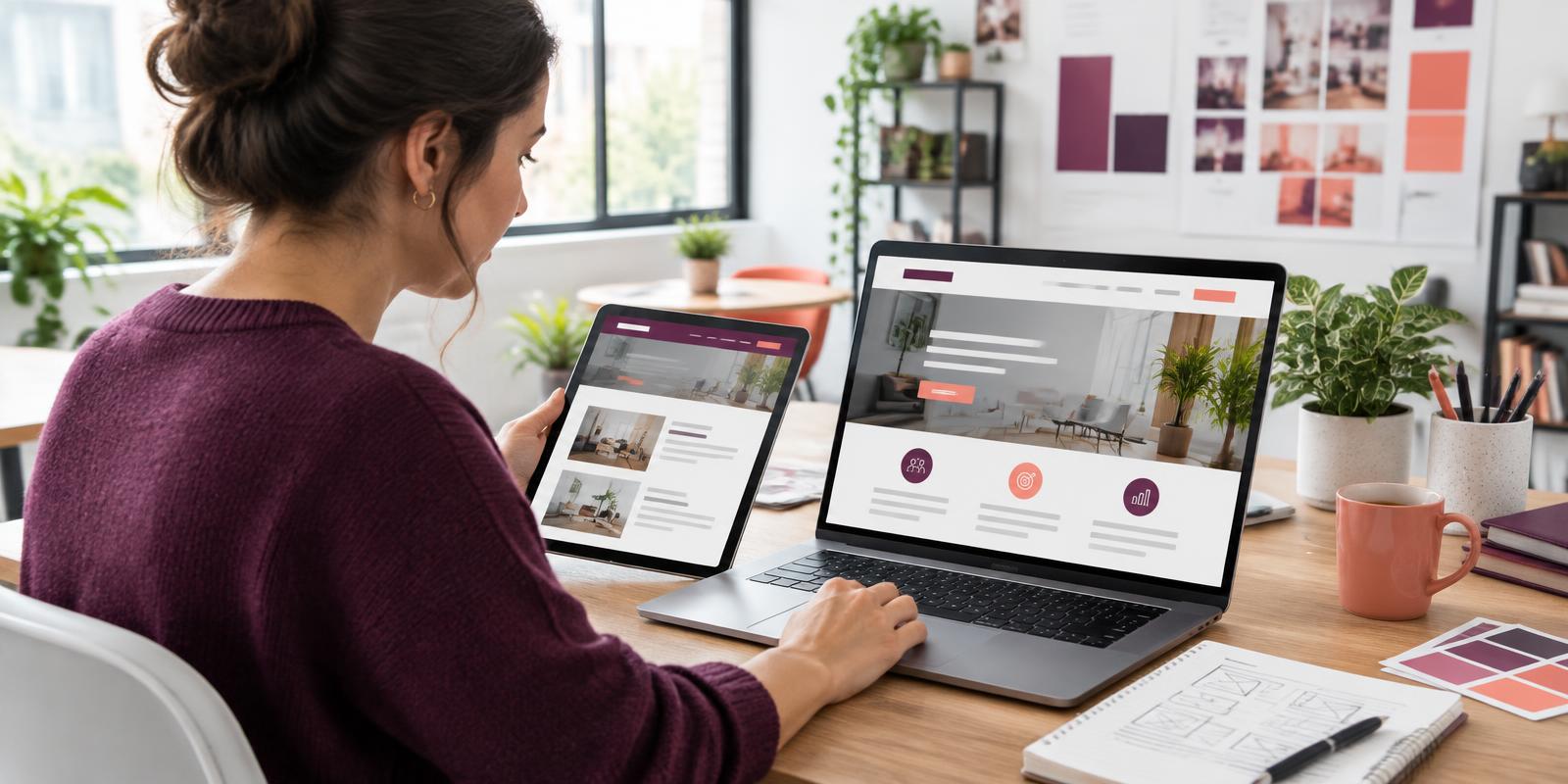
- Website optimisation – These days there are no excuses, your website must look presentable and work on any platform or device. The growth of mobile phones and tablets is not slowing down. Therefore, you need to make sure that your site looks good wherever it is searched. Optimizing your site for all devices and making it mobile friendly will improve the user experience for web users and will increase your SEO rankings and Google analytics. Also, reducing the page load time and improving overall site speed will help with these rankings.
- Create content – Creating SEO focused content and blog posts for your website can help web users to find your website easier. Quality content that implements keyword research can make your website appear higher in search results pages and improve your visibility. User experience will naturally be increased on your website if you provide relevant, interesting content perfectly designed for your target audience.
- Contact and location – Make it easy for your customers to get in contact with you. You should offer multiple points of contact on your site. These should include a phone number, social media links, emails and an easy-to-use contact form. Putting this information on each page and making sure that it is readily available will ensure that potential customers can find your details whenever they need it.
- Add a call to action – A call to action (CTA) is a part of a webpage or piece of content that encourages your target audience to do something. In digital marketing, CTAs help a business convert a web user into a lead. CTAs can be used for a variety of purposes. CTAs can encourage web users to buy a product, follow a business’s social media account or subscribe to a newsletter.
How Can Our Web Design and Development Service Assist Your Business?
We provide brand new websites to new and existing businesses to help them improve their website visibility and functionality. We also assist businesses to improve their online presence by providing a re-branding service. Some of the main elements of a website we assist with include:
Brand Representation – We will conduct online research to find out more about your service industry and your potential competitors. We will also work closely with you throughout the design process to ensure that we represent your unique brand well.
Website Quality – We are an experienced web design agency, and we understand the importance of having a great site. Search engines prioritise faster loading websites when ranking web pages in a specific order. This is why we incorporate SEO into the design process of all our websites.
Usability – We create simple, attractive, easy to navigate websites to ensure great user experience. We host our websites on the best platforms to ensure webpage speed is not an issue. We incorporate the use of attractive designs and calls to actions to ensure potential customers have the best possible experience whilst visiting your website.
Our websites are responsive and work well on all mobile devices. We use the WordPress as our content management system due to its ease of use and flexibility. Using WordPress means that the owner of the website can easily add and change content as and when they need to.
Why Choose Bark Street Digital?
Bark Street Digital are a firm of professional digital marketing and IT experts. Our clients have benefitted from increased profitability due to their improved online visibility.
This has been achieved through the use of our website development and design services. We have also assisted in the improvement of business websites for our clients by providing services such as SEO content creation, SEO audits and social media management.
We understand that when it comes to digital marketing, one size does not fit all, which is why we offer bespoke packages to suit each business’s needs at competitive prices. Our ability to provide effective, high quality website design services sets us apart from our competitors.
Have a look at our services page to find out how we can assist.
If you would like some free initial advice on your marketing strategy, or if you require a quote for our services, feel free to contact us.
Get in Touch
01204 236028
Open Hours
08:30 – 16:30
Monday- Friday
Our Office
4 Bark Street East
Bolton, BL1 2BQ
What we Do
SEO
Web design
Social media management
WordPress management
A practical framework for what Makes a Good Website
A website should make a business easier to choose. Visual polish matters, but it must be supported by fast loading, accessible layouts, clear navigation, useful content and an obvious route to enquiry. Those principles remain valuable even when design trends, devices and publishing tools change.
Start with the customer and the commercial goal
Write down the specific customer you want to attract, the problem they are trying to solve and the action you want them to take. This prevents what Makes a Good Website from becoming a disconnected task. Review the language customers use in calls, enquiries, reviews and search data. It often reveals concerns that a generic keyword list misses.
Next, define the commercial outcome. More traffic can be useful, but qualified enquiries, booked appointments, suitable applications or sales are clearer measures of value. Agree what a good enquiry looks like and make sure the page or campaign answers the questions that usually prevent that person from acting.
Build evidence and clarity into the experience
People need reasons to believe a claim. Use accurate service details, transparent explanations, relevant examples, genuine reviews and clear contact information. Avoid unsupported superlatives. If evidence is not available, explain the process and the standards used instead of inventing a result. This creates a more trustworthy experience and gives the content substance.
Structure also matters. Lead with a direct answer, then develop the detail under descriptive headings. Use examples where they improve understanding, connect related pages with useful internal links and remove anything that exists only to repeat a phrase. A reader should be able to scan the page and still understand its main recommendation.
Measure, learn and improve
Create a simple baseline before making changes. Record the relevant visibility, engagement and enquiry measures, then review them on a regular schedule. Look for patterns over time rather than treating a single week as a verdict. Where possible, compare lead quality as well as volume so growth does not come at the expense of relevance.
Improvement should be deliberate. Test one meaningful change, such as a clearer proposition, a stronger answer to a common objection or a simpler enquiry path. Keep what helps and document what you learn. Revisit the content when services, customer questions or evidence change. This approach keeps what Makes a Good Website accurate and useful without chasing every short-lived trend.
Common mistakes to avoid
Do not copy a competitor's plan without understanding its audience, authority or budget. Avoid publishing vague content that could belong to any business, and do not hide the next step behind unnecessary friction. It is also important not to confuse activity with progress. A full calendar or a longer report is not valuable unless it supports better decisions and better-fit enquiries.
Finally, allow enough time to learn. Strong marketing compounds when useful pages, clear messages and reliable measurement work together. Review the strategy regularly, but do not abandon a sound direction because of normal short-term variation. The objective is a dependable source of visibility and demand that supports the wider business.
What Makes a Good Website? FAQs
What makes a business website effective?+
An effective website explains the offer quickly, works well on common devices and gives visitors a clear route to the information or action they need. Fast loading, accessible design, useful copy, genuine evidence and reliable measurement all matter. Visual design should support these goals rather than make the visitor work harder.
How often should a website be reviewed?+
Core security, forms, backups and updates should be monitored routinely. Review important content and conversion journeys whenever the offer or customer needs change, with a broader performance review at sensible intervals. Analytics, search data and enquiry feedback can identify priorities without redesigning the site merely because a visual trend has changed.
Should SEO be considered during a website build?+
Yes. Page structure, redirects, internal links, performance and content decisions affect how a rebuilt site can be found. Planning these elements before launch reduces avoidable losses and rework. Record valuable existing URLs and search performance, then test the new experience on different devices before and after release.
How should website performance be measured?+
Start with reliable conversion tracking and define the actions that matter, such as calls, forms, bookings or sales. Review qualified conversion rate alongside traffic sources, landing-page behaviour and technical performance. Numbers should be interpreted with customer feedback so the team improves both the quantity and suitability of enquiries.